


- January 30, 2026
- by learn2sync
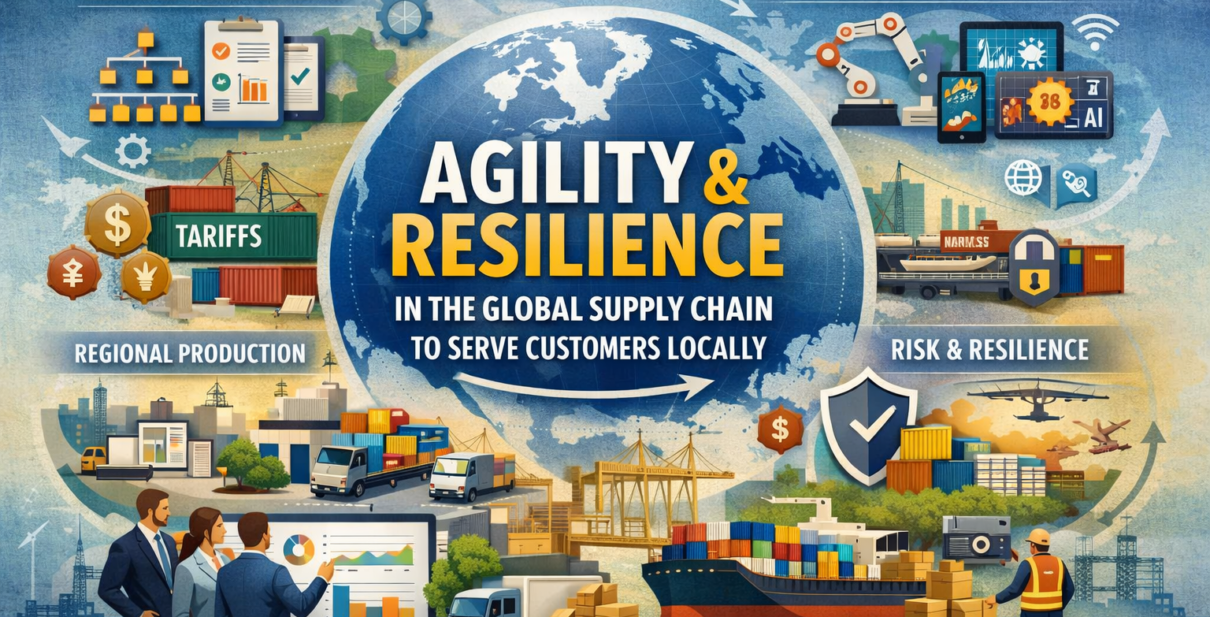
For global consumer products companies, optimizing supply chain networks for cost and efficiency is no longer enough. Today’s operating environment — shaped by geopolitics, trade and tariff barriers, regulatory shifts, and volatile demand — demands a new balance between global scale and local responsiveness.
To serve key customers, accelerate innovation, and protect profitable growth, supply chains must be redesigned across six strategic vectors:
1. Organizational Structure & Governance
Clear decision rights, empowered regional teams, and faster cross-functional coordination are essential to respond quickly to market disruptions.
2. Decision-Making & Planning
Shorter planning cycles, scenario-based planning, and demand-sensing capabilities enable faster, data-driven responses to uncertainty.
3. Product & Network Design
Regionalized production, modular product architectures, postponement strategies, and flexible capacity help reduce risk and improve service.
4. Technology Enablement
End-to-end visibility, digital twins, advanced analytics, and AI-enabled planning tools are becoming foundational capabilities.
5. Regulatory & Trade Readiness
Built-in compliance agility and proactive monitoring of tariff and trade policy changes are now strategic necessities.
6. Competitive Responsiveness
The ability to localize assortments, pricing, and service levels faster than competitors is a growing source of advantage.
The future of supply chain excellence lies in mastering this dual mandate: global efficiency with local agility. Companies that get this balance right will be best positioned to serve consumers, protect margins, and grow sustainably in an increasingly fragmented world.